





AposBook Team
Published November 1, 2026
Cancer and sugar are closely connected in discussions about cancer metabolism. Cancer cells often consume glucose at higher rates than normal cells to support their energy needs and rapid growth. This has raised important questions about how dietary sugar and carbohydrate intake may influence cancer development and progression, and why glucose metabolism is a key focus of the ketogenic diet perspective.
The ketogenic diet approaches this subject from a metabolic perspective, suggesting that changes in the body's energy metabolism may influence cancer cell growth and survival. To understand this theory, it is important to look at how cancer cells use glucose, where glucose comes from and whether restricting carbohydrates can affect cancer development.
1. Understanding Cancer and Its Causes
Cancer develops when abnormal cells acquire changes that allow them to grow and divide uncontrollably. These changes can result from genetic mutations and disruptions in the processes that normally regulate cell growth, division and death.
Cancer development is influenced by several factors, including inherited genetics, aging, tobacco use, alcohol consumption, obesity, certain infections, radiation and environmental exposures.
From the ketogenic diet perspective, metabolic dysfunction is also considered an important factor in cancer development. This perspective focuses on changes in how cells produce and use energy, particularly their reliance on glucose and other nutrients to support growth and survival.
However, cancer is not exclusively a metabolic disease. Genetic mutations and metabolic changes can both contribute to its development.
2. How Cancer Cells Use Glucose
Glucose is a simple sugar that serves as an important energy source for the body's cells. It is transported through the bloodstream and used by cells to produce the energy needed for their normal functions.
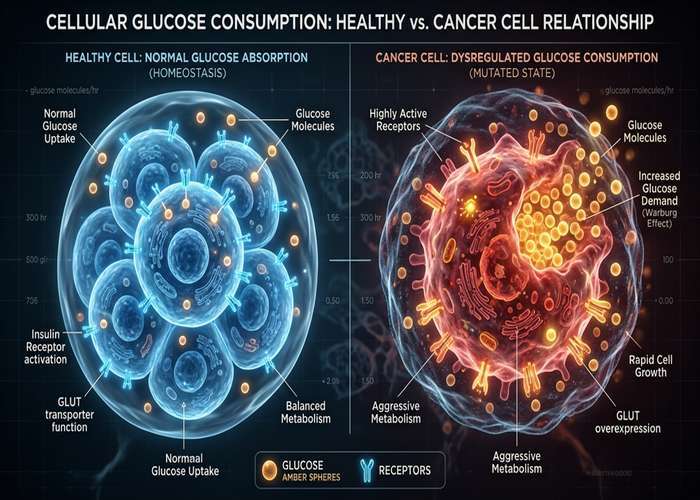
Cancer cells also require energy and nutrients to grow and multiply. Many cancer cells consume glucose at higher rates than normal cells, even when oxygen is available. This altered pattern of energy metabolism is known as the Warburg effect.
In addition to producing energy, glucose metabolism provides building blocks that rapidly dividing cancer cells can use to make new cellular components.
This increased glucose consumption is one reason why glucose metabolism has become an important area of cancer research.
However, cancer cells do not depend exclusively on glucose. Depending on the type of cancer and its environment, they may also use other nutrients, including fats and amino acids, to support their growth.
3. Does Glucose Come Only from Processed Sugar or from All Carbohydrates?
One common misconception is that the sugar associated with cancer refers only to processed sugar found in sweets, cakes, chocolate and sugary drinks.
In reality, blood glucose can come from several dietary carbohydrate sources, not just added sugar.
When digested, many carbohydrates are broken down into simple sugars that enter the bloodstream. For example:
- Added sugars: Table sugar, sweets, cakes and sugary drinks provide sugars that can contribute to blood glucose levels.
- Grains and starches: Bread, rice, pasta, cereals and potatoes contain starch, which is broken down mainly into glucose during digestion.
- Fruits: Fruits contain natural sugars, including glucose, fructose and sucrose.
- Dairy products: Milk contains lactose, which is broken down into glucose and galactose.
However, not all carbohydrates behave the same way. Fiber, for example, is not digested into glucose in the same way as starch and sugars. Whole fruits, vegetables, legumes and whole grains also provide fiber and other nutrients important for health.
Therefore, glucose is not supplied only by processed sugar; it can also come from many carbohydrate-containing foods. Nevertheless, this does not mean that all carbohydrate foods have the same effects on blood glucose, metabolic health or cancer risk.
4. How Excess Sugar and Metabolic Dysfunction May Relate to Cancer
From the ketogenic diet perspective, the concern extends beyond glucose itself to the metabolic changes that may accompany excessive consumption of refined carbohydrates and added sugars.
Several processes are relevant:
- Insulin resistance: Excess body weight and metabolic dysfunction can contribute to insulin resistance, causing the body to produce more insulin to regulate blood glucose. Insulin and related growth signals are involved in cellular growth and proliferation and are being investigated for their potential role in cancer development.
- Excess body fat: A diet that regularly provides more calories than the body needs can contribute to weight gain and obesity. Excess body fat is associated with an increased risk of several types of cancer.
- Chronic inflammation: Obesity and certain metabolic disturbances can contribute to persistent inflammation, which may create conditions that support cancer development.
These relationships help explain why the concern about excessive sugar consumption is not limited to its immediate effect on blood glucose. However, they do not establish that eating carbohydrates directly causes cancer.
5. Can Restricting Carbohydrates Starve Cancer Cells?
The ketogenic diet proposes that significantly reducing carbohydrate intake may change the body's energy metabolism and reduce glucose availability to cancer cells.
By restricting carbohydrates, the diet lowers dietary glucose intake, reduces insulin levels in many people and encourages the body to use more fatty acids for energy. The liver also produces ketones, which can serve as an alternative energy source for several tissues.
This has led researchers to investigate whether changing the availability of glucose and other metabolic fuels could influence cancer cell growth.
However, there is an important limitation: the body continues to maintain blood glucose even when dietary carbohydrate intake is very low. It can produce glucose from other substances, including certain amino acids and glycerol, through a process called gluconeogenesis.
Furthermore, cancer cells can adapt their metabolism and use alternative nutrients. Therefore, restricting carbohydrates does not selectively deprive cancer cells of energy.
Although ketogenic diets are being investigated as a possible complementary approach in cancer research, there is currently insufficient clinical evidence to establish that they prevent, treat or cure cancer.