






AposBook Team
Published October 29, 2026
The ketogenic diet is a very-low-carbohydrate, high-fat eating pattern that encourages the body to use fat as its main energy source and produce ketones. However, not everyone follows this diet in the same way. Some people prioritize whole, nutrient-rich foods, while others focus mainly on keeping carbohydrate intake low, regardless of food quality.
These approaches are commonly known as clean keto and dirty keto. Although both can help the body enter ketosis, they differ in their food choices, nutritional quality and potential effects on overall health.
What Is Clean Keto?
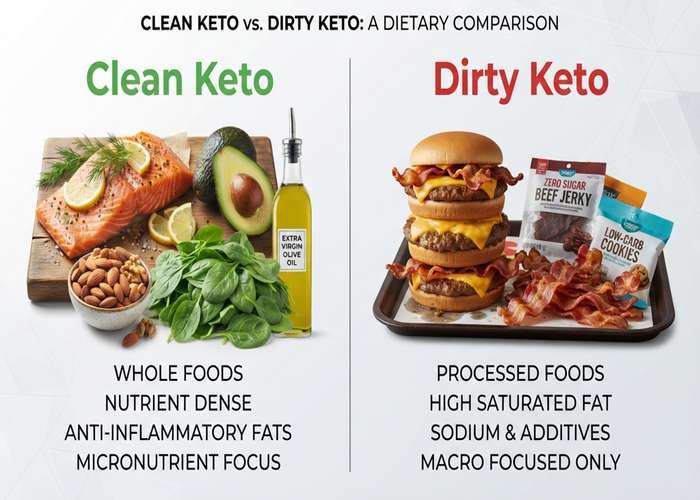
Clean keto emphasizes whole, minimally processed and nutrient-dense foods while maintaining the low carbohydrate intake required for ketosis.
It focuses on healthy fat sources such as olive oil, avocados, nuts, seeds and fatty fish. It also includes protein from eggs, poultry, fish and unprocessed meat, alongside low-carbohydrate vegetables such as spinach, broccoli, cauliflower and zucchini.
Foods high in carbohydrates, including bread, rice, pasta, potatoes and sugary products, are restricted. Small portions of lower-carbohydrate fruits, particularly berries, may also be included.
The main goal of clean keto is to achieve ketosis while maintaining better nutritional balance through a variety of whole foods. It does not require expensive products, organic ingredients or grass-fed meat; overall food quality is what matters most.
What Is Dirty Keto?
Dirty keto follows the same basic principle of carbohydrate restriction but places much less emphasis on food quality. It allows people to obtain their fats and proteins from processed and packaged foods, provided they remain within their carbohydrate limits.
Common choices include bacon, sausages, processed cheese, fast food, packaged keto snacks and commercially prepared low-carb desserts.
Although these foods may fit the ketogenic macronutrient requirements, they can contain excessive sodium, saturated fats and additives while providing relatively little fiber and essential micronutrients.
Dirty keto is sometimes called lazy keto because it focuses primarily on carbohydrate counting rather than selecting nutritious foods and preparing balanced meals.
Clean Keto vs. Dirty Keto: Health Implications
The main difference between clean and dirty keto is not necessarily their ability to produce ketosis, but the nutritional quality of the foods consumed.
Clean keto generally provides better nutritional value. By emphasizing vegetables, nuts, seeds, fish and other whole foods, it offers more opportunities to obtain essential vitamins, minerals, fiber and healthy fats. It also encourages replacing saturated fats with unsaturated fats, which is important for cardiovascular health.
Dirty keto may increase nutritional and cardiovascular concerns. Heavy reliance on processed meats, packaged foods and high-saturated-fat products can increase sodium and saturated fat intake while reducing the variety of nutrients in the diet. Excessive saturated fat can raise LDL cholesterol, an important risk factor for atherosclerosis.
A further concern is inadequate fiber intake. When vegetables, nuts and seeds are neglected, people following dirty keto may consume too little fiber, potentially contributing to constipation and other digestive problems.
Research on ultra-processed foods also raises concerns. A 2024 umbrella review published in The BMJ, titled "Ultra-processed Food Exposure and Adverse Health Outcomes: Umbrella Review of Epidemiological Meta-analyses," found associations between higher consumption of ultra-processed foods and several adverse health outcomes, including cardiovascular disease-related mortality and type 2 diabetes. However, this research examined ultra-processed foods generally, not dirty keto specifically.
It is important to note that clean keto does not eliminate every potential risk of the ketogenic diet. Some people experience increased LDL cholesterol even when following a diet based on whole foods and healthier fats. Therefore, food quality and individual cholesterol responses both matter.
How to Follow a Cleaner Ketogenic Diet
People following keto can improve the nutritional quality of their diet by focusing on a few basic principles:
- Choose whole foods: Prioritize vegetables, fish, eggs, nuts, seeds, avocados and unprocessed meat rather than relying heavily on packaged keto products.
- Prioritize healthy fats: Use olive oil, avocado oil, nuts and seeds instead of consuming excessive amounts of butter, fatty meats and other sources of saturated fat.
- Include low-carbohydrate vegetables: Eat a variety of leafy greens, broccoli, cauliflower and other non-starchy vegetables to obtain fiber, vitamins and minerals.
- Limit processed foods: Reduce processed meats, packaged snacks, fast food and commercially prepared keto desserts.
- Check food labels: Pay attention to carbohydrate content, added sugars, sodium, saturated fats and ingredients.
- Maintain nutritional balance: Ensure adequate intake of protein, fiber, vitamins and minerals despite carbohydrate restrictions.
Conclusion: Clean Keto or Dirty Keto?
Both clean and dirty keto can help the body achieve ketosis because both restrict carbohydrate intake. However, achieving ketosis does not automatically mean that a diet is nutritionally adequate or beneficial for long-term health.
Dirty keto focuses mainly on carbohydrate restriction, often allowing excessive reliance on processed foods. Clean keto combines carbohydrate restriction with whole, nutrient-dense foods and healthier sources of fat.
Overall, clean keto is the more nutritionally sound approach. Although it does not eliminate all potential risks associated with ketogenic diets, it provides a better foundation for meeting nutritional needs and supporting overall health.


